
AI Computing Boom Drives Cabling Innovation: VSFF Ultra-Small High-Density Multi-Fiber Connectors (MMC & SN-MT) Emerge as Primary Upgrade Replacement for MPO
【Shenzhen, Oct 5, 2026】The construction of generative AI and large model computing power continues to surge. Bandwidth demand inside AI data centers grows exponentially, and the number of optical fibers inside racks expands rapidly. Traditional MPO multi-fiber connectors are hitting hard density bottlenecks. The fiber patch cord industry is ushering in a new round of technological iteration. VSFF (Very Small Form Factor) ultra-small high-density multi-fiber connectors have become the most watched technical direction in the industry. Represented by MMC connectors and SN-MT connectors, this new-generation fiber interconnection solution acts as an upgrade alternative to MPO and is being deployed in large-scale ultra-large AI computing cluster cabling scenarios, reshaping the ecosystem of fiber patch cords and pre-terminated cabling within data centers.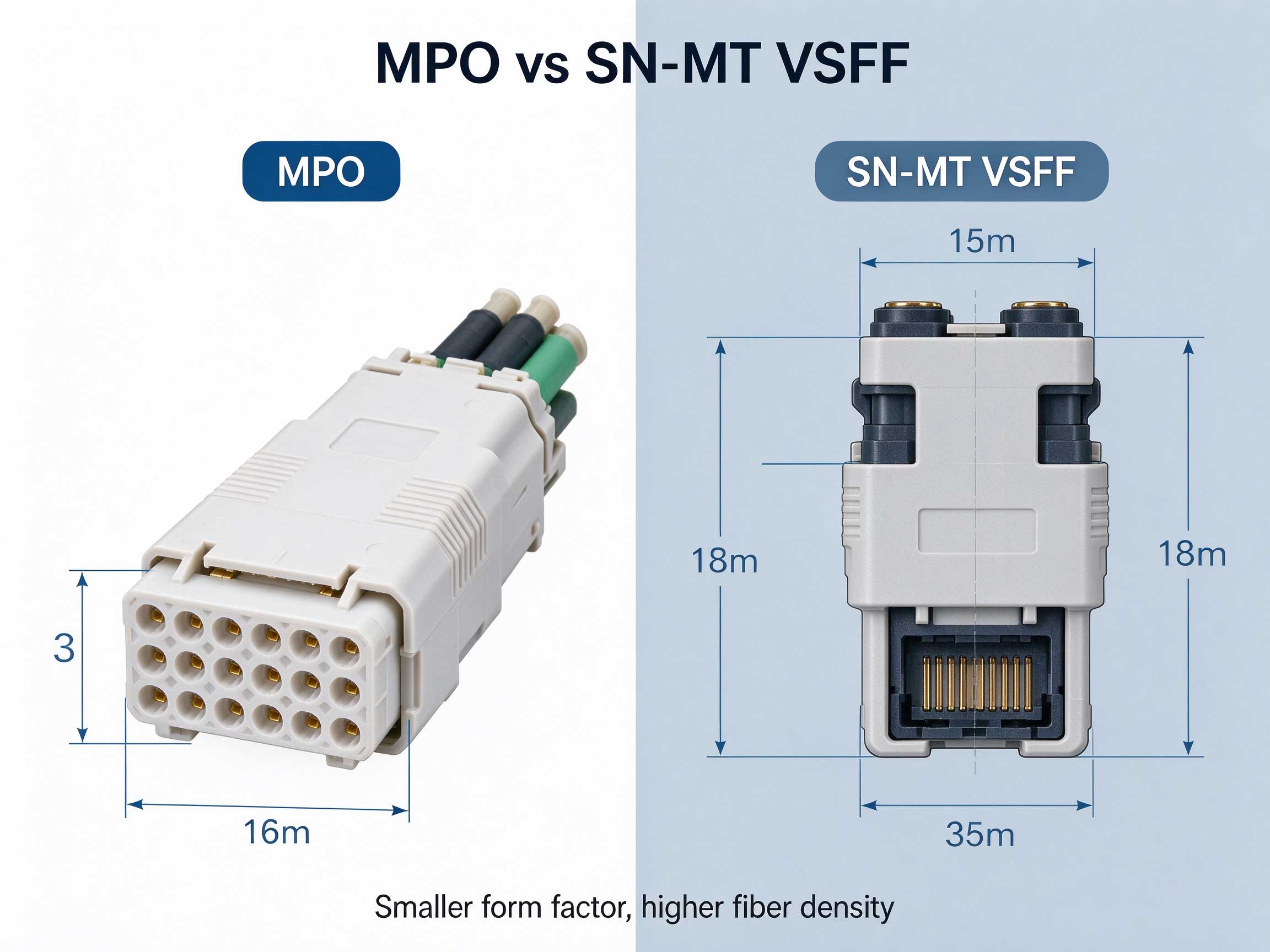
Figure 1: Dimension comparison between traditional MPO connector and SN-MT VSFF connector
1. Technical Background: Achievements and Density Limitations of MPO
Over the past decade, MPO fiber connectors have served as the standard solution for high-density multi-fiber cabling in data centers. Featuring multi-fiber integration and rapid deployment via pre-termination, MPO fiber patch cords have been widely used in cloud data centers and backbone cabling for 400G/800G networks, supporting the implementation of Leaf-Spine network architecture.
However, in the era of AI computing clusters, 800G and 1.6T optical modules are commercially deployed at scale. The port quantity on switch front panels keeps rising. MPO connectors are relatively bulky, creating a hard ceiling for fiber core capacity that can be fitted in a 1RU patch panel. Cable congestion inside cabinets makes cable management, heat dissipation and maintenance increasingly difficult. Within fixed rack space, MPO alone can no longer support massive fiber interconnection requirements of AI clusters. The industry urgently needs new multi-fiber connector solutions with smaller form factors and higher fiber capacity per port, giving rise to VSFF ultra-small high-density multi-fiber connectors.
2. Two Main VSFF Product Lines: MMC and SN-MT – Upgrade Alternatives to MPO
VSFF stands for Very Small Form Factor multi-fiber connectors. Its core advantages: drastically increase fiber density within the same panel footprint while maintaining low insertion loss. It is compatible with OSFP and QSFP-DD high-speed optical modules and oriented to next-gen on-board optical interconnection such as CPO (Co-Packaged Optics) and near-packaged optics. Currently there are two mainstream technical routes in the market: MMC and SN-MT.
SN-MT Connector (Senko Nano-MT)
SN-MT is a VSFF multi-fiber connector developed by Senko. It supports 8-core /16-core fibers in a single row. Under the same footprint, its fiber density reaches 2.7 times that of a traditional 16-core MPO. A 1RU patch panel can support up to 3456 fiber cores. It inherits mature MT ferrule alignment structure with insertion loss ≤0.35dB, compatible with single-mode and multimode fiber patch cords. Up to 4 SN-MT connectors can be integrated inside one optical module to support 800G/1.6T high-speed interconnection. It is suitable for high-density pre-terminated backbone cabling and intra-equipment optical interconnection in AI server rooms.
MMC Connector (Multi-fiber Micro Connector)
MMC is the VSFF multi-fiber connector solution led by US Conec. It adopts precision TMT ferrules and supports 16-core and 24-core specifications. Its volume is only 1/3 of traditional MPO. A 1RU patch panel can reach maximum 6336 fiber cores, delivering up to 3× higher density than MPO. It retains proven MT alignment principles to guarantee low optical loss and good multi-vendor interoperability with fast ecosystem expansion. Ideal for horizontal scaling and vertical expansion architecture of AI data centers, MMC is a preferred solution for internal interconnection of CPO Co-Packaged Optics equipment. Complete cabling assemblies including MMC fiber patch cords, adapters and patch panels have gradually achieved mass production.
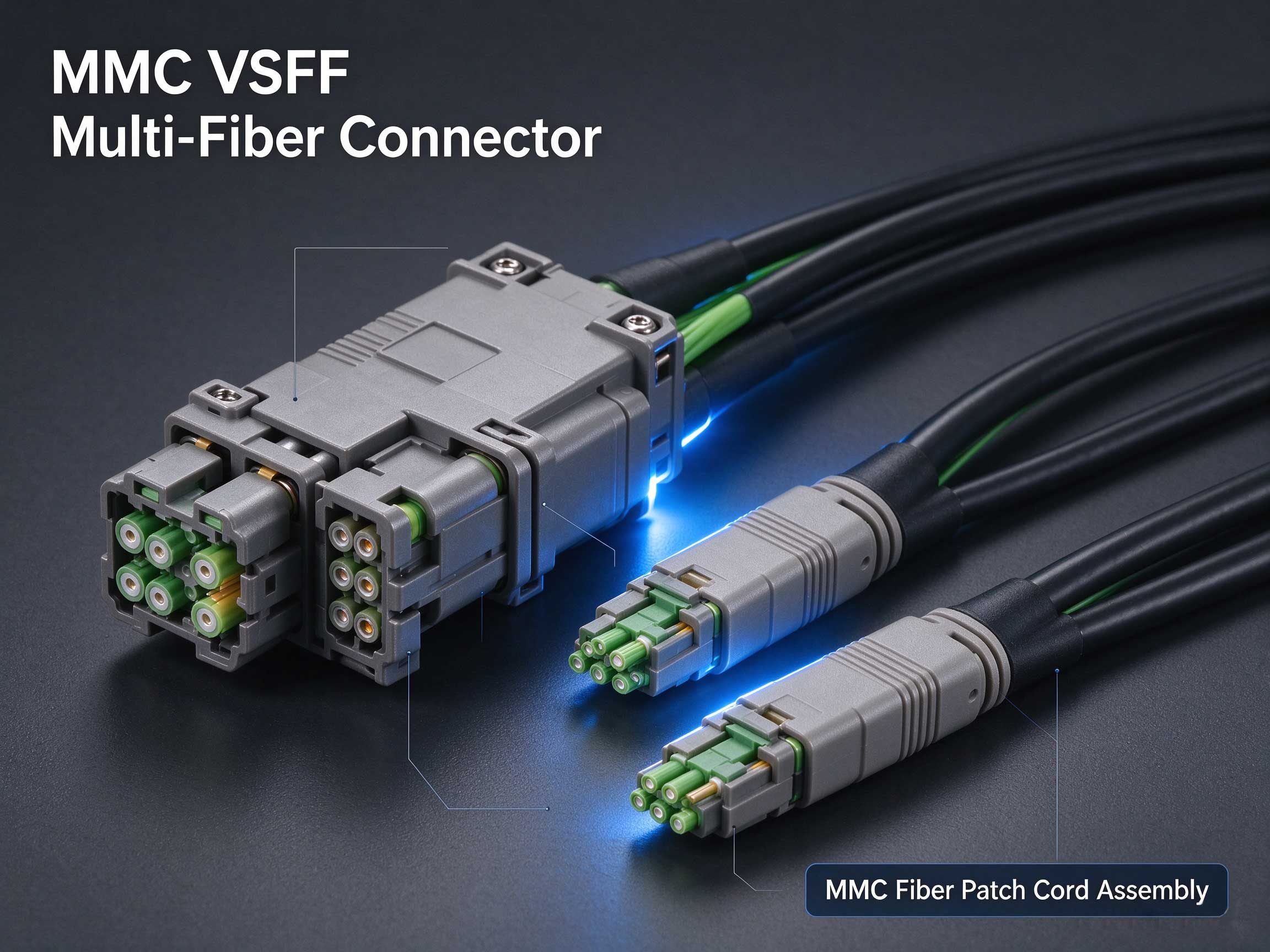
Figure 2: MMC VSFF multi-fiber connector and MMC fiber patch cord assembly
Positioning note: SN-MT and MMC are both VSFF ultra-small high-density multi-fiber connectors. They do not replace each other directly. Instead, they are two parallel industrial routes serving as MPO upgrade solutions for different AI computing scenarios. Traditional MPO will not be phased out immediately. It will coexist with VSFF solutions for legacy room renovation and newly built high-density computing clusters.
3. Industrial Value: VSFF Fiber Patch Cord Solutions Solve Core Cabling Pain Points of AI Data Centers
VSFF fiber patch cords based on MMC and SN-MT address three critical pain points in AI data centers:
- Density Boost: Smaller connector footprint allows more fibers to be deployed within the same cabinet and patch panel, eliminating large-scale cabinet reconstruction and cutting civil engineering & data center expansion costs.
- Lightweight Cabling: Matching ultra-fine cable VSFF fiber patch cords feature smaller outer diameters, optimizing cabinet air ducts, improving equipment heat dissipation and reducing cable congestion.
- Support Next-Gen Optical Interconnection: Beyond backbone cabling inside server rooms, MMC and SN-MT also support CPO co-packaged optics and on-board optical interconnection, supporting 1.6T and future higher-rate optical links, ensuring long-term evolvability of data center infrastructure.
Leading global cloud vendors and computing operators have launched small-scale pilot testing. Major optical component and fiber patch cord manufacturers are accelerating R&D and mass production of VSFF connectors, MMC fiber patch cords and SN-MT pre-terminated cables. Upstream and downstream industrial chains (ferrules, molds, cables, test equipment) keep maturing, speeding up the transition from lab validation to commercial deployment. VSFF is kicking off a new cycle of fiber cabling for the AI era.

Figure 3: Schematic diagram of high-density cabinet VSFF (MMC / SN-MT) cabling application in AI data center
4. Industry Outlook
Industry experts forecast that within the next 2–3 years, newly built AI data center projects will gradually adopt the VSFF high-density cabling system. Market share of MMC fiber patch cords and SN-MT fiber patch cords will keep rising, gradually replacing traditional MPO solutions in ultra-high density computing scenarios. MPO will remain widely used in medium & low-density cloud data centers and legacy renovation projects, forming a coexistence pattern between MPO and VSFF (MMC/SN-MT). As the supply chain matures and cost continues to decline, VSFF ultra-small high-density multi-fiber connectors will become core optical interconnection products for AI computing infrastructure construction, driving product iteration and upgrade across the entire fiber patch cord industry.